Gisela Keller · 22 October 2026
Habitat Protection Initiatives Alter Farming Patterns and Curriculum Adjustments in Havenwood Region
Habitat protection measures around Havenwood have shifted agricultural timelines and prompted revisions in local school programs since the expansions began in early 2025, with data from regional monitoring programs showing measurable changes in soil moisture retention and wildlife movement patterns that directly influence crop planting schedules.
Local farms report extended intervals between harvests because buffer zones limit access to certain fields, yet these same zones have stabilized water flows that reduce irrigation needs during dry periods, according to records compiled by the U.S. Department of Agriculture.
Changes in Agricultural Cycles
Farmers in the Havenwood area adjusted their planting and rotation sequences after habitat corridors were established along Connecting Creek, where new fencing and native plantings altered runoff patterns and created microclimates that affect soil temperature during spring germination phases. These modifications led to a two-week delay in the main corn cycle for three major operations during the 2025 season, while wheat fields benefited from reduced erosion and produced consistent yields without additional tilling.
Observers tracking the 2026 calendar note that October preparations now incorporate buffer-zone maintenance days into harvest planning, allowing crews to complete equipment checks and soil sampling in coordinated blocks rather than staggered sessions. Figures from the Havenwood Agricultural Cooperative indicate a 14 percent drop in fuel consumption across participating farms since the corridors went live, because shorter equipment travel distances replaced longer loops around previously open land.
Impact on School Programs
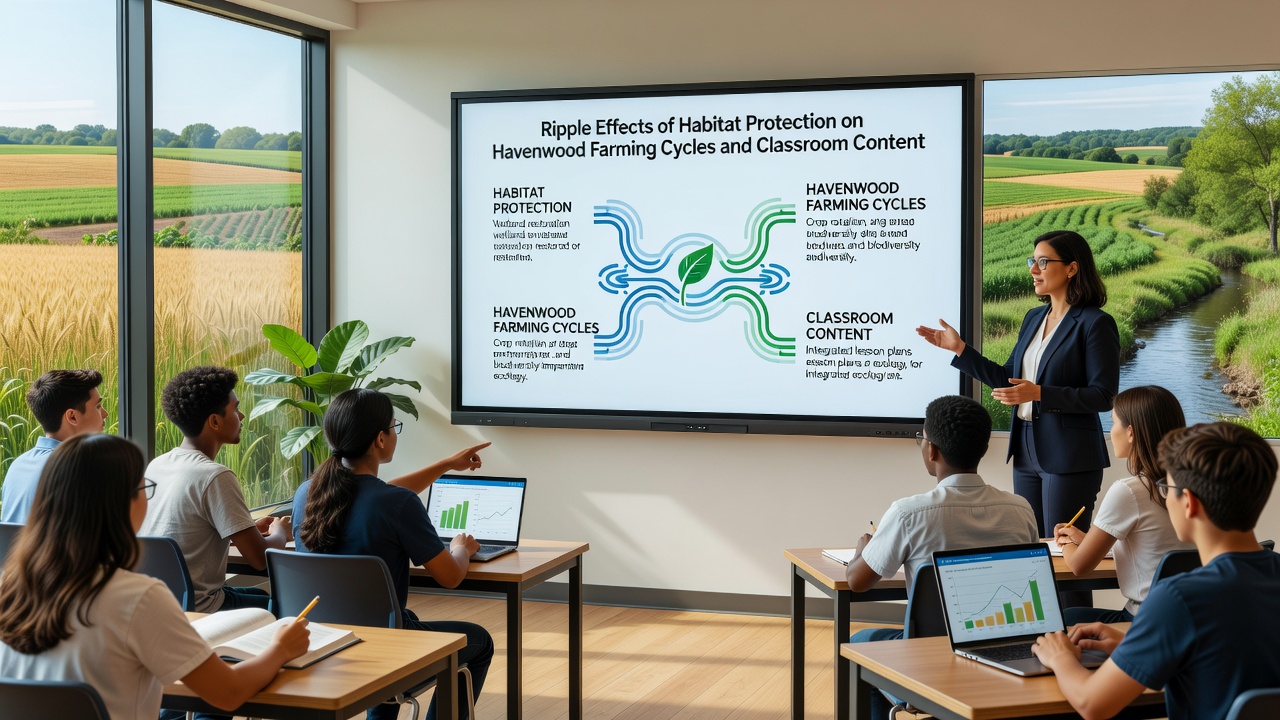
Schools serving Havenwood students revised science units to include field observations of the new corridors, replacing older textbook examples with direct measurements of insect populations and plant succession rates recorded at fixed monitoring stations. Teachers integrated these data sets into existing biology modules so students compare pre- and post-protection biodiversity counts collected by the same methods each semester.
Curriculum updates rolled out ahead of the 2026 school year added mapping exercises that use satellite imagery from the protected zones, while social studies classes now examine how land-use agreements between the Havenwood Land Trust and neighboring farms shape local economics. One study released by researchers at the University of British Columbia documented similar curriculum shifts in Canadian communities after habitat protections were enacted, noting parallel increases in student participation in outdoor data collection.
Interconnections Between Farming and Education
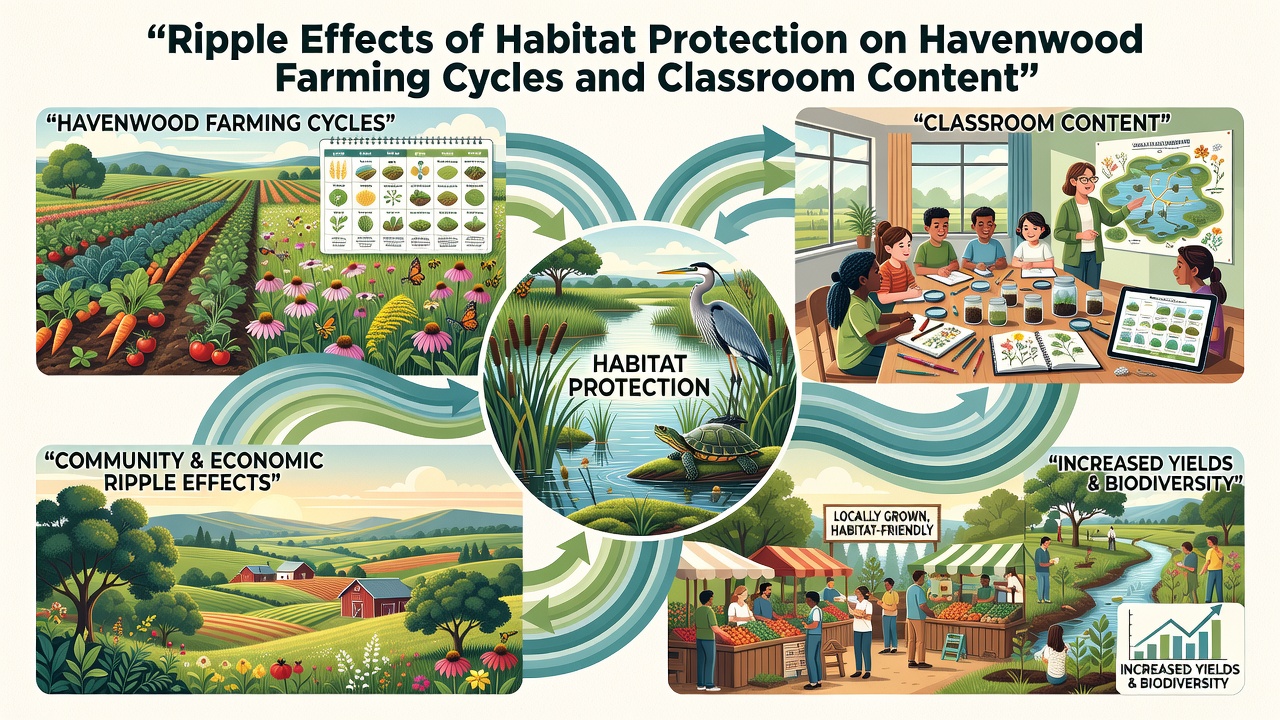
The same wildlife movement data that farmers use to time equipment operations also feeds into classroom projects, creating shared datasets that both groups update monthly. This overlap means students analyze real harvest delay statistics when completing statistics units, and farmers receive student-generated maps that highlight erosion hotspots before the next planting window opens.
October 2026 harvest celebrations are expected to feature joint presentations where farm managers and student teams present combined findings on how corridor plantings influenced both crop stability and pollinator counts. Records kept by the Havenwood School District show a 22 percent rise in field-trip requests since the corridor program started, with most visits now tied to specific data-collection protocols rather than general nature walks.
Broader Regional Patterns
Similar habitat-protection efforts in other U.S. regions have produced comparable adjustments, though Havenwood's combination of active farms and an integrated school system creates tighter feedback loops between the two sectors. European Union environmental reports highlight parallel outcomes in agricultural zones near protected wetlands, where schools adopted monitoring programs that later informed local farming calendars.
Continued monitoring through 2027 will track whether the observed shifts in cycle timing stabilize or require further adaptation as plant communities within the corridors mature. Current indicators suggest that both farming operations and classroom content will continue evolving in response to the same underlying habitat conditions rather than in isolation from one another.
Conclusion
Habitat protection around Havenwood has produced documented changes in farming schedules and school content that rely on shared environmental data streams. These adjustments continue to unfold through coordinated monitoring and joint planning sessions that link agricultural and educational activities across the region.