Cameron Krause · 5 November 2026
Expanding Conservation Zones Transform Farming Techniques, School Curricula, and Tourist Expenditures
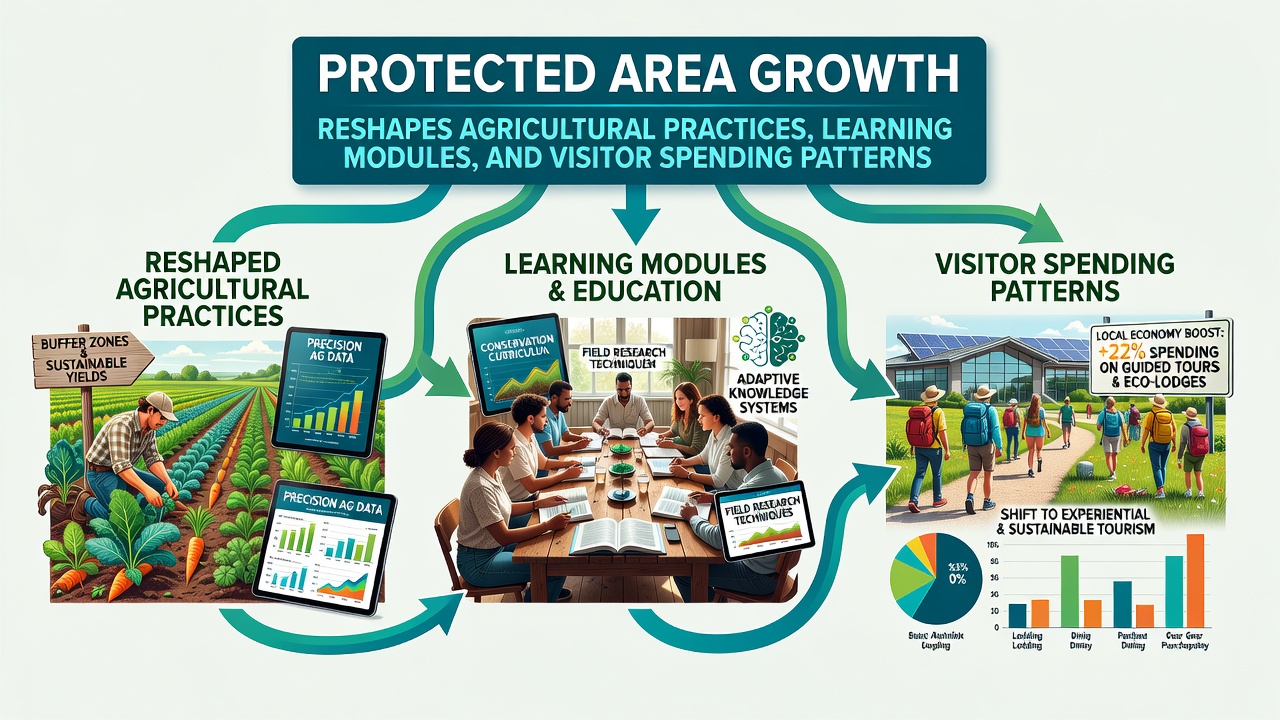
Protected area expansions across multiple continents have prompted measurable adjustments in how farmers manage land near conservation boundaries, how educators update instructional materials, and how visitors allocate spending during trips to these regions. Data compiled through 2026 indicates that these changes accelerated following international commitments made at the 2022 Kunming-Montreal Global Biodiversity Framework, with new designations adding millions of hectares under protection by late 2025.
Adjustments in Agricultural Practices
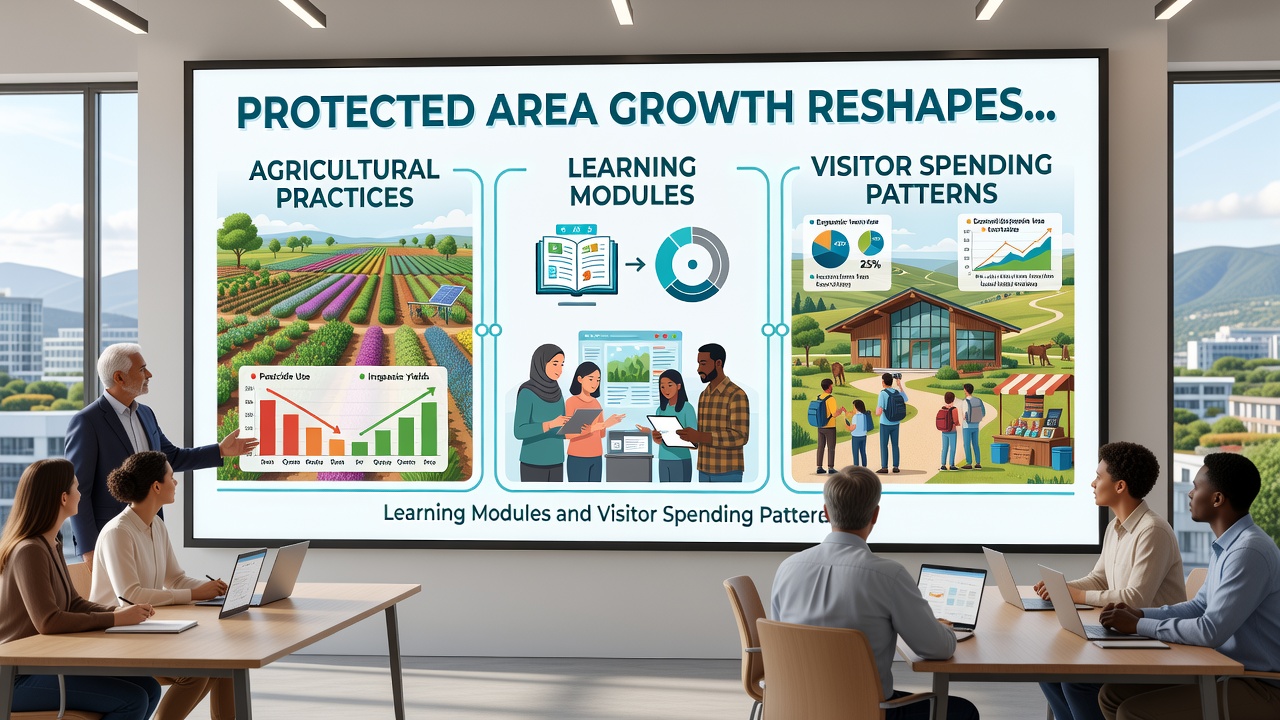
Farmers operating near newly protected zones have adopted buffer strips, reduced chemical applications, and integrated rotational grazing systems to comply with regulations that limit runoff and habitat fragmentation. Studies from the European Environment Agency show that operations in Natura 2000 adjacent areas reduced pesticide use by an average of 18 percent between 2023 and 2026 while maintaining yield stability through precision agriculture tools. In Australia the Department of Climate Change, Energy, the Environment and Water documented similar shifts where graziers near expanded reserves in New South Wales installed wildlife corridors that also improved soil retention during heavy rainfall events.
These modifications often require initial capital outlays for fencing, monitoring equipment, and training, yet government incentive programs have offset portions of those costs. Reports released in November 2026 from the U.S. Department of Agriculture highlight that participating farms in the Conservation Reserve Program extensions saw net revenue increases after three years due to premium pricing for sustainably produced goods. Observers note that crop selection has diversified in several regions, with greater emphasis on native pollinator-supporting plants that align with surrounding ecosystem requirements.
Revisions to Educational Content
Schools and extension services have updated learning modules to reflect the ecological and economic realities created by protected area growth. Curricula now incorporate case studies on habitat connectivity, sustainable land management, and the role of biodiversity in food systems. University programs in environmental science and agriculture have expanded field components that place students directly in buffer zones for data collection and analysis.
According to materials developed by the Food and Agriculture Organization of the United Nations, vocational training modules emphasize integrated pest management and agroforestry techniques suited to edge habitats. Primary and secondary educators have introduced modules that combine biology with economics, showing how protected areas influence local markets and supply chains. These updates rolled out progressively through 2025 and 2026, supported by digital platforms that allow real-time sharing of monitoring data from protected sites.
Changes in Visitor Spending Patterns
Tourism economics around protected areas have evolved as new sites open and existing ones expand interpretive offerings. Spending data from Parks Canada indicate that visitors to recently enlarged reserves allocated higher percentages of budgets toward guided educational tours and locally produced goods rather than standard lodging and transport alone. Average per-visitor expenditure on interpretive services rose 12 percent in monitored locations during the 2025 season.
Similar patterns appear in South African national parks administered by South African National Parks, where growth in protected zones correlated with increased purchases of community-sourced crafts and food products. Operators report that overnight stays lengthened when educational programs tied directly to conservation outcomes were added, boosting revenue for adjacent businesses that meet sustainability certification standards. November 2026 visitor surveys further revealed growing interest in citizen science activities that allow tourists to contribute monitoring data during their visits.
These spending shifts have prompted local economies to develop complementary services such as equipment rentals for low-impact exploration and short courses on regional ecology. Transportation providers have adjusted routes to include stops at agricultural operations demonstrating compatible practices, creating additional revenue streams for farms that participate.
Conclusion
Protected area growth continues to drive interconnected changes across agriculture, education, and tourism sectors. Monitoring programs established by national agencies and international bodies track these developments through standardized indicators that allow comparison across regions. The patterns observed through late 2026 demonstrate that policy frameworks supporting both conservation and compatible economic activities can produce measurable adaptations in farming methods, instructional design, and visitor behavior without requiring separate treatment of each domain.